
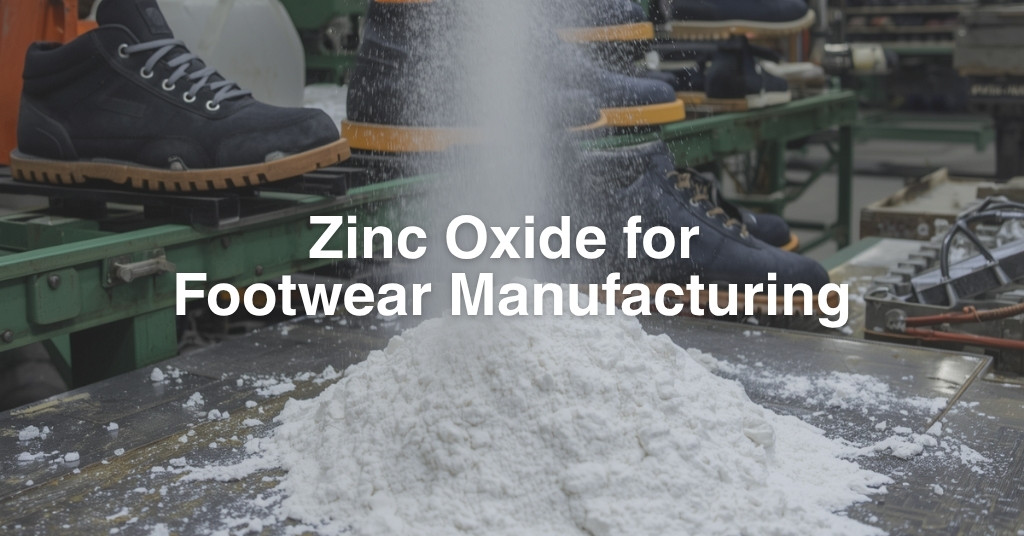
In today’s competitive footwear industry, manufacturers are under pressure to deliver durable, high-performance, and cost-efficient shoes. One critical ingredient that often goes unnoticed is zinc oxide for footwear manufacturing.
From improving rubber soles to enhancing vulcanization efficiency, zinc oxide plays a key role in modern footwear materials. Whether you’re producing rubber outsoles, EVA foam midsoles, or advanced transparent rubber, choosing the right zinc compound can make or break your product quality.
This guide explains how zinc oxide enhances footwear manufacturing—and how you can leverage it for better results and higher profits.
What is Zinc Oxide for Footwear Manufacturing?
Zinc oxide (ZnO) is an essential chemical additive used in rubber manufacturing, especially in the footwear industry.
It acts as:
- A vulcanization activator
- A performance enhancer
- A durability booster
In simple terms, it helps transform raw rubber into strong, flexible, and wear-resistant materials—ideal for shoe soles and midsoles.
👉 Learn more about its basics here:
https://alnoorchemicalindustry.com/what-is-zinc-oxide/
Role of Zinc Oxide in Rubber & Footwear Materials
Zinc oxide is widely used in zinc oxide rubber formulations due to its chemical reactivity and stability.
Key Functions:
- Vulcanization Activation
- Speeds up sulfur cross-linking
- Improves tensile strength and elasticity
- Thermal Conductivity Enhancement
- Helps dissipate heat during processing
- Ensures consistent rubber curing
- Improved Chemical Stability
- Protects against degradation
- Extends product lifespan
- Foaming Support
- Works with blowing agents in EVA foam
- Improves structure in midsoles
Key Benefits of Zinc Oxide for Footwear Manufacturing
1. Enhanced Durability
- Improves wear resistance
- Extends lifespan of rubber soles
2. Superior Performance
- Better flexibility and grip
- Increased tensile strength
3. Improved Processing Efficiency
- Faster curing cycles
- Lower production defects
4. Compatibility with Advanced Materials
- Works with:
- EVA foam
- Transparent rubber
- Recycled materials
5. Cost Optimization
- Reduces material waste
- Improves batch consistency
Applications in Footwear Industry
Zinc oxide is used across multiple components in footwear manufacturing:
Rubber Outsoles
- Provides abrasion resistance
- Enhances traction and durability
Midsoles (EVA Foam)
- Acts as a foaming promoter
- Improves cushioning and structure
Shoe Soles
- Increases strength under pressure
- Maintains flexibility over time
Industrial Footwear
- Used in safety boots and heavy-duty shoes
- Ensures long-term performance in harsh environments
👉 Explore industrial applications:
https://alnoorchemicalindustry.com/industries-that-use-zinc-oxide/
Advanced Zinc Oxide Technologies
Modern footwear manufacturers are shifting toward advanced zinc compounds:
Nano Zinc Oxide
- Higher surface area
- Better dispersion in rubber
- Enhanced performance at lower dosage
Active Zinc Oxide
- Improved reactivity
- Faster vulcanization
Shell-Core Technology
- Controlled release of zinc ions
- Better efficiency in rubber curing
These innovations help manufacturers produce high-performance footwear with reduced material usage.
Sustainability & Environmental Impact
The footwear industry is moving toward eco-friendly production, and zinc oxide plays a role:
Lower Carbon Emissions
- Reduces energy consumption during curing
Supports Recycled Materials
- Works effectively in recycled rubber formulations
Zinc Reduction Technologies
- Advanced formulations reduce zinc usage without compromising performance
This makes zinc oxide a more sustainable choice for modern manufacturers.
Challenges & Considerations
While zinc oxide offers numerous benefits, manufacturers should consider:
- Optimal Dosage
- Excess ZnO can affect flexibility
- Cost Variability
- Prices fluctuate in global markets
- Environmental Regulations
- Need for reduced zinc discharge
- Compatibility Testing
- Required for new formulations
Use Case Example
A footwear manufacturer producing sports shoes switched to active zinc oxide in their rubber formulation:
Results:
- 20% faster vulcanization
- 15% improvement in wear resistance
- Reduced material waste
This highlights how choosing the right zinc compound directly impacts profitability.
Why Choose a Reliable Zinc Oxide Supplier?
To ensure consistent quality, always source from trusted manufacturers.
👉 Explore reliable sourcing options:
- https://alnoorchemicalindustry.com/zinc-oxide-manufacturer-pakistan/
- https://alnoorchemicalindustry.com/zinc-oxide-supplier-pakistan/
- https://alnoorchemicalindustry.com/bulk-zinc-oxide-supplier-pakistan/
- https://alnoorchemicalindustry.com/zinc-oxide-exporter-pakistan/
Conclusion
Zinc oxide for footwear manufacturing is more than just an additive—it’s a performance driver.
From improving rubber durability to enabling advanced foam formulations, ZnO plays a critical role in producing high-quality footwear.
If you’re looking to:
- Improve product performance
- Reduce production costs
- Stay competitive in the footwear industry
👉 It’s time to optimize your formulations with the right zinc oxide.
Contact us today to get a customized quote or technical consultation.
FAQs (Schema-Friendly)
1. Why is zinc oxide used in footwear manufacturing?
Zinc oxide is used as a vulcanization activator in rubber, improving strength, durability, and flexibility in footwear components.
2. How does zinc oxide improve rubber soles?
It enhances tensile strength, wear resistance, and helps achieve better curing during rubber manufacturing.
3. Can zinc oxide be used in EVA foam midsoles?
Yes, it works as a foaming promoter, improving structure and cushioning in EVA-based midsoles.
4. What is active zinc oxide?
Active zinc oxide has higher reactivity, allowing faster vulcanization and improved rubber performance with lower dosage.
5. Is zinc oxide environmentally friendly?
Modern formulations support zinc reduction and compatibility with recycled materials, making it more sustainable.