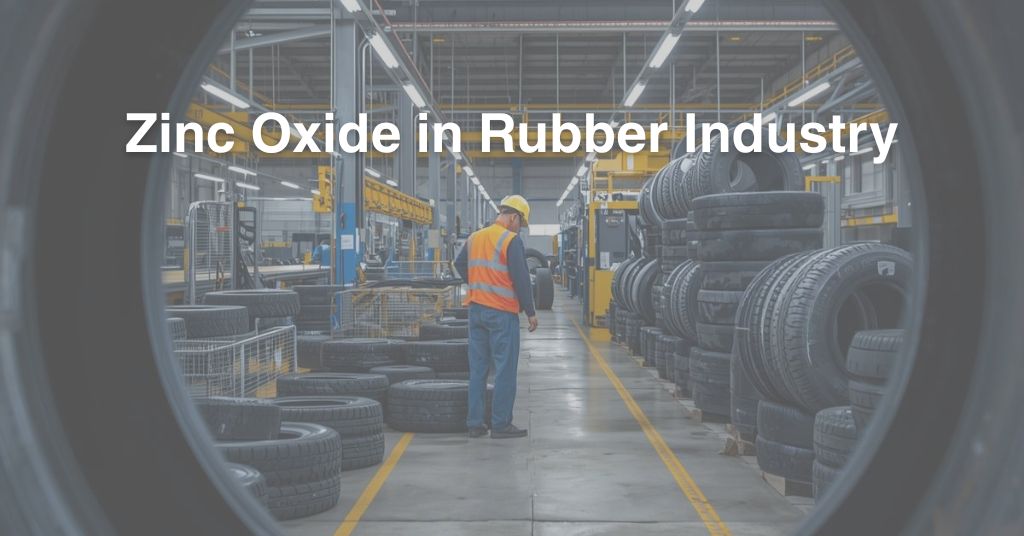
In modern rubber manufacturing, performance, durability, and consistency are non-negotiable. Whether you’re producing tires, industrial seals, or automotive components, the quality of your raw materials directly impacts your final product.
One of the most essential yet often overlooked materials is zinc oxide in the rubber industry.
Zinc oxide plays a vital role in enhancing rubber properties, improving production efficiency, and ensuring long-term performance. From vulcanization to durability, it acts as a key activator that makes high-performance rubber possible.
For manufacturers and procurement managers, understanding its role isn’t just technical, it’s a strategic advantage.
What is Zinc Oxide?
Zinc oxide (ZnO) is an inorganic compound widely used across multiple industries, especially in rubber manufacturing.
It appears as a fine white powder and is known for:
- High purity and stability
- Excellent chemical properties
- Strong reactivity in rubber formulations
In the rubber industry, zinc oxide is primarily used as an activator in the vulcanization process, making it a cornerstone material in rubber compounding.
Role of Zinc Oxide in Rubber Manufacturing
In rubber production, zinc oxide is not just an additive—it is a functional ingredient that directly influences performance.
Key Roles:
- Acts as a vulcanization activator
- Improves interaction between rubber and accelerators
- Enhances curing efficiency
- Stabilizes rubber compounds
Without zinc oxide, the curing process becomes inefficient, leading to weaker and less durable rubber products.
Why Zinc Oxide is Used in Vulcanization
Understanding Vulcanization
Vulcanization is the chemical process that transforms raw rubber into a durable, elastic, and heat-resistant material by forming cross-links between polymer chains.
Role of Zinc Oxide in Vulcanization
Zinc oxide works alongside stearic acid to form zinc salts, which:
- Activate accelerators
- Speed up the curing process
- Improve cross-link density
Result:
- Stronger rubber
- Better elasticity
- Improved resistance to wear and tear
👉 This is why the role of zinc oxide in vulcanization is considered indispensable in rubber manufacturing.
Key Benefits of Zinc Oxide in Rubber
1. Improves Durability
Zinc oxide strengthens the rubber matrix, making it more resistant to:
- Abrasion
- Mechanical stress
- Environmental exposure
This is especially important for tire manufacturers and heavy-duty industrial products.
2. Enhances Elasticity
Elasticity determines how well rubber returns to its original shape after deformation.
Zinc oxide helps:
- Maintain flexibility
- Improve resilience
- Reduce permanent deformation
3. Heat Resistance
Rubber products are often exposed to high temperatures during use.
Zinc oxide contributes to:
- Thermal stability
- Reduced degradation under heat
- Longer product lifespan
4. Chemical Stability
In industrial environments, rubber may come into contact with oils, chemicals, and solvents.
Zinc oxide improves:
- Resistance to chemical reactions
- Stability under harsh conditions
- Product reliability
Applications of Zinc Oxide in Rubber Industry
Zinc oxide is widely used across different segments of rubber manufacturing.
1. Tires
- Passenger vehicle tires
- Truck and heavy-duty tires
- Off-road tires
Why it matters:
Improves wear resistance, grip, and durability.
2. Industrial Rubber Products
- Conveyor belts
- Rubber sheets
- Seals and gaskets
Benefits:
Enhanced strength and long-term performance.
3. Footwear
- Rubber soles
- Sports shoes
- Safety boots
Advantages:
Better flexibility, comfort, and durability.
4. Automotive Components
- Hoses
- Bushings
- Engine mounts
Impact:
Improved resistance to heat, pressure, and chemicals.
Technical Advantages of Rubber Grade Zinc Oxide
When selecting materials, rubber grade zinc oxide offers several performance advantages:
High Surface Area
- Improves reaction efficiency
- Enhances dispersion in rubber compounds
Controlled Particle Size
- Ensures uniform mixing
- Leads to consistent product quality
High Purity Levels
- Reduces impurities
- Improves chemical performance
Better Activation Efficiency
- Requires lower dosage
- Optimizes production cost
How to Choose the Right Zinc Oxide for Rubber Industry
Selecting the right zinc oxide supplier is crucial for product quality and operational efficiency.
Key Factors to Consider:
1. Purity Level
- Look for high ZnO content
- Avoid contamination that affects curing
2. Particle Size & Surface Area
- Fine particles improve dispersion
- Better mixing = better performance
3. Manufacturing Process
- Indirect process (French process) offers higher purity
- Direct process may be cost-effective but less pure
4. Consistency of Supply
- Reliable bulk supply is critical for manufacturers
Why Quality Matters for Manufacturers
Using low-quality zinc oxide can lead to:
- Poor vulcanization
- Weak rubber structure
- Increased rejection rates
- Higher production costs
On the other hand, high-quality zinc oxide ensures:
- Consistent product performance
- Reduced waste
- Better customer satisfaction
- Stronger brand reputation
FAQs: Zinc Oxide in Rubber Manufacturing
1. Why is zinc oxide important in rubber manufacturing?
Zinc oxide acts as a vulcanization activator, improving curing efficiency and enhancing rubber properties like strength, elasticity, and durability.
2. What type of zinc oxide is best for rubber industry?
Rubber grade zinc oxide with high purity and fine particle size is ideal for consistent performance and efficient processing.
3. How much zinc oxide is used in rubber compounds?
Typically, 3–5% zinc oxide is used, depending on the formulation and application requirements.
4. Can low-quality zinc oxide affect rubber performance?
Yes. Poor-quality zinc oxide can lead to:
- Incomplete vulcanization
- Reduced durability
- Product failure
5. Is zinc oxide suitable for all rubber products?
Yes, it is widely used across tires, industrial rubber, footwear, and automotive components due to its versatile properties.
Conclusion: A Strategic Material for High-Performance Rubber
Zinc oxide is not just a raw material, it is a performance driver in rubber manufacturing.
From enabling efficient vulcanization to improving durability and chemical resistance, its role is critical across all rubber applications.
For manufacturers and procurement professionals, choosing the right zinc oxide supplier can significantly impact:
- Product quality
- Production efficiency
- Long-term profitability
Looking for High-Quality Zinc Oxide for Rubber Manufacturing?
If you are a:
- Rubber manufacturer
- Tire producer
- Industrial buyer
- Bulk procurement manager
👉 Partner with a trusted supplier for consistent quality and reliable bulk delivery.